UF Institute of Food and Agricultural Sciences Extension logo
Give      University of Florida
Resources
    Toggle Search Form
    GIVE UNIVERSITY OF FLORIDA
    • HOME
    • About Us
          • Subheading 1
          • Link 1
          • Link 2
          • Link3
          • Link 4
          • Subheading 2
          • Link 5
          • Link 6
          • Link 7
          • Link 8
          • Subheading 3
          • Link 9
          • Link 10
          • Link 11
          • Link 12
          • Subheading 4
          • Link 13
          • Link 14
          • Link 15
          • Link 16
          • Subheading 5
          • Link 17
          • Link 18
          • Link 19
          • Link 20
    • Meet The Team
          • Subheading 1
          • Link 1
          • Link 2
          • Link3
          • Link 4
          • Subheading 2
          • Link 5
          • Link 6
          • Link 7
          • Link 8
          • Subheading 3
          • Link 9
          • Link 10
          • Link 11
          • Link 12
          • Subheading 4
          • Link 13
          • Link 14
          • Link 15
          • Link 16
          • Subheading 5
          • Link 17
          • Link 18
          • Link 19
          • Link 20
    • Resources
        • Searches 
        • Jobs 
        Dean & Department Searches
        • IFAS Human Resources
        • UF Jobs
    • Technical Information
          • Subheading 1
          • Link 1
          • Link 2
          • Link3
          • Link 4
          • Subheading 2
          • Link 5
          • Link 6
          • Link 7
          • Link 8
          • Subheading 3
          • Link 9
          • Link 10
          • Link 11
          • Link 12
          • Subheading 4
          • Link 13
          • Link 14
          • Link 15
          • Link 16
          • Subheading 5
          • Link 17
          • Link 18
          • Link 19
          • Link 20
    • Tools
          • Subheading 1
          • Link 1
          • Link 2
          • Link3
          • Link 4
          • Subheading 2
          • Link 5
          • Link 6
          • Link 7
          • Link 8
          • Subheading 3
          • Link 9
          • Link 10
          • Link 11
          • Link 12
          • Subheading 4
          • Link 13
          • Link 14
          • Link 15
          • Link 16
          • Subheading 5
          • Link 17
          • Link 18
          • Link 19
          • Link 20
          • Subheading 1
          • Link 1
          • Link 2
          • Link3
          • Link 4
          • Subheading 2
          • Link 5
          • Link 6
          • Link 7
          • Link 8
          • Subheading 3
          • Link 9
          • Link 10
          • Link 11
          • Link 12
          • Subheading 4
          • Link 13
          • Link 14
          • Link 15
          • Link 16
          • Subheading 5
          • Link 17
          • Link 18
          • Link 19
          • Link 20

    Forage Team

    Forage Team

    Forage Extension Lab

    The Forage Extension Laboratory supports our producers by providing information on quality of grazed or stored forages. Our laboratory uses Near Infrared Spectroscopy (NIRS) for estimating nutritive value, with equations provided by the NIRS Consortium (https://www.nirsconsortium.com/). Reports will contain information on crude protein (CP), neutral detergent fiber (NDF), in vitro total dry matter digestibility at 30 hours (IVTDMD30), total digestible nutrients (TDN) and relative forage quality (RFQ).


    Forage samples will be processed weekly, and results reported within 10 days from the date the samples are received. The cost of the sample is $10.

    Sampling:

    Properly collecting and identifying a forage sample is very important.

    • Hay samples should be taken with a core sampler driven into the end of a rectangular bale, or the rounded side of a round bale. Several cores should be combined in one composite sample with approximately 0.5 lbs of material. Each cutting and each field should be sampled separately.
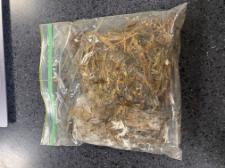
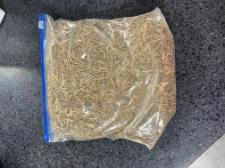
    • Pasture samples can be collected using "hand-plucked" samples or cut with scissors from different locations around the pasture and placed in a plastic or paper bag. Make sure all bags are identified with a unique sample number. Samples should be sent to the laboratory immediately after they are harvested.
    • Silage or haylage can be collected from the face of a bunker silo as it is being fed, or by cutting small slits along the side of the bag and penetrating the hay sampler to collect the material. Reseal the slit with waterproof tape after collection. Collect silage from five or six places along the bag, mix well, and extract a single sample to send to the laboratory. Immediately place the sample in a plastic bag and seal it. If the sample is not mailed right away, place the sample in a refrigerator or freezer.

    Remember, your results are only as good as your sample.

    Forage Extension Laboratory Form

    University of Florida Logo
    Contact

    Feedback
    UF/IFAS Forage Program
    P.O. Box 11018 Gainesville, FL 32611-0180
    -

    Land Grant Mission
    • Teaching
    • Research
    • Extension
    Information
    • Ask IFAS (EDIS)
    • UF/IFAS Experts
    • UF/IFAS Blogs
    • UF/IFAS Bookstore
    Policy
    • Accessible UF
    • EEO Statement
    • IFAS Web Policy
    • SSN & UF Privacy
    • Analytics (Google Privacy)

    © 2025 University of Florida, IFAS Last Modified:Tue, 7 Jul 2026 17:19:31 EDT