Care and Nutrition
BEFORE you bring your chicks home
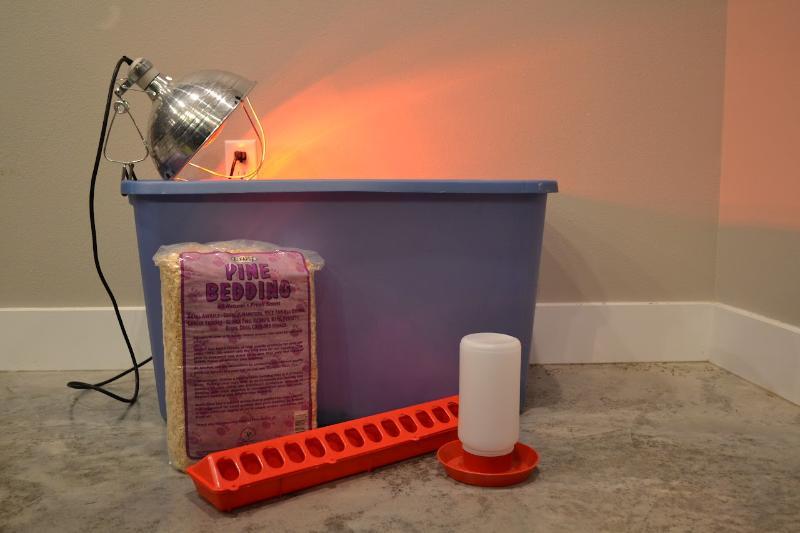
Gather your supplies and make your own brooder to keep your chicks in.
- Large, lidded container with high sides
- Pine shavings
- Waterer
- Feeder
- Heat lamp & bulb
- Turn on your heat lamp to warm up the brooder
- Fill up the waterer so it will be room temperature
- Add marbles or pebbles to the waterer so chicks cannot get into the waterer and drown
- Add chick starter feed to the feeder
- Add your baby chicks to their new home!
- Cut a large hole in the top of the lid. Secure wire over the hole with hot glue or zip ties. You can also do this on the sides to increase ventilation.
-
Caring for your baby chicks
Caring for your baby chicks
Water: Keep clean, fresh water in front of chicks at all times.
Feed weeks 1-6: Use a pre-mixed, commercial chick-starter feed with at 20-24% protein.
Check each chick’s vent for stuck-on manure. Clean off manure with a cotton tip moistened with warm water or vegetable oil. If chicks cannot excrete waste, this can be fatal. Check daily during the first week.
Watch your chicks closely to make sure they are drinking water and eating. Also, watch their behavior to get your brooder temperature right.
Brooder temperature should be 90-95° F at chick level then reduced by 5° each week. Raise the height of the heat lamp to lower the temperature.
- Too cold? Chicks will huddle directly under the heat source and could chirp loudly.
- Too warm? Chicks will move to the edge of the heat source and could chirp loudly.
- Just right? Chicks will move freely around the space and chirp softly.
AskIFAS Resource: Care of Baby Chicks- more about brooders, care, and nutrition for baby chicks.
-
Caring for your growing chicks
Caring for your growing chicks
Water: Keep clean, fresh water in front of chicks at all times.
Feed weeks 7-18: Switch to a chicken grower feed with 16-20% protein.
Feed weeks 18+: Switch to a chicken layer feed with 14-16% protein.
Housing: Around 9 weeks of age, you’ll need to move your growing chicks to a larger structure. Grown chickens need at least 1.5 square feet of floor space in a coop.
Around this time, you’ll need to remove roosters from the pen if you intend to raise only eggs. If you’ll be incubating and hatching eggs to increase your brood, one rooster to 10 hens is the rule of thumb.
Your greatest cost (around 70%) in raising chickens will come from feed. Feed is an investment. The better your chickens are fed, the greater your return in eggs will be. The most common mistakes in raising chickens is feeding the wrong feed at the wrong time. The second most common mistake is not providing enough feed. Fresh feed should always be available. When fed from a feeder, chickens will not waste their feed.
AskIFAS Resource: Raising Backyard Chickens for Eggs - more about housing, feed, and nutrition for your growing birds.
-
Keeping Your Flock Healthy
Keeping Your Flock Healthy
Be a Zoonotic Disease Detective Workbook (pdf) teaches you all about zoonoses - diseases that pass between humans and animals. You'll learn how to keep you and your chicks healthy and how to keep germs away.
USDA Resource: Defend the Flock. Biosecurity: Let's keep our poultry health together.
AskIFAS Resource: Factors Affecting Egg Production in Backyard Chicken Flocks