Ghost or Peanut Snail
Scientific Name: Bulimulus bonariensis (Syn B. sporadicus)
Common name: Ghost snail, peanut snail
Authors: Kathi Malfa, Xavier Martini
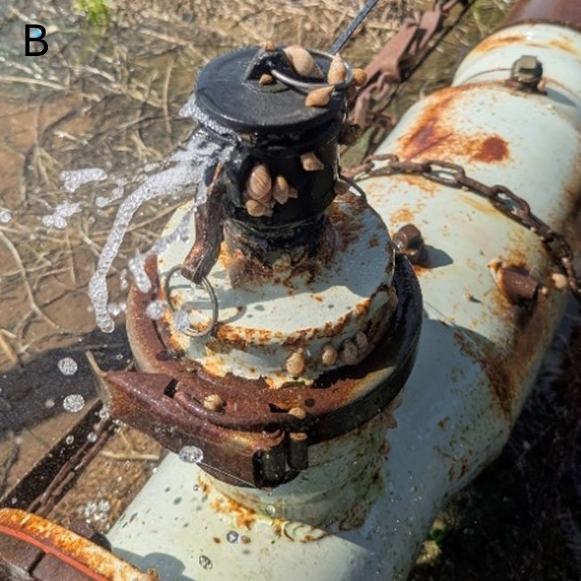
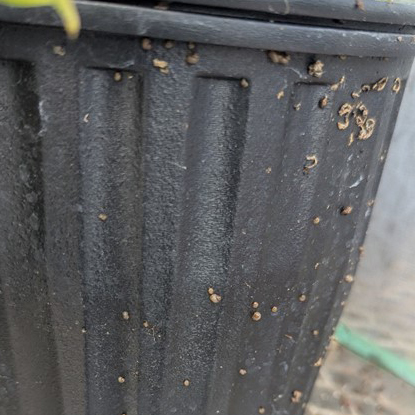
Bulimulus snails, also called the ghost and peanut snails, have emerged as significant invasive agricultural pests across the southeastern United States. The Bulimulus genus represents several species of snails; thus, colonies are likely a complex variety of species. These snails were first reported in Florida in 2009, and have since spread to more than 26 counties, negatively impacting crops such as cotton, peanut, citrus, blueberries, and soybeans where they become established. The snail's typical diet consists of detritus and plant films, but they have also been observed directly consuming plant materials. Bulimulus snails exhibit climbing behaviors, ascending plants, structures, and equipment in response to changes in moisture and ground temperature. They also tend to aggregate in large clusters around humidity, leading to issues with irrigation and frost protective practices.
Bulimulus snails can be identified by their small, conical shell, which is typically brown to tan in coloration and approximately 1-2 cm in length. Their shell is wider near the opening of the shell and tapers towards the posterior end. The snail's body is a light tan color, with the head containing one set of tentacles. The mature adults are simultaneous hermaphrodites, meaning each individual carries both male and female organs, allowing them to reproduce rapidly. They can lay anywhere from 20 to 50 eggs per clutch, which are uniformly white and opaque in appearance. The eggs are typically buried 1-2 centimeters below the soil surface and remain soft and smooth until hatching.
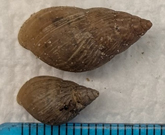
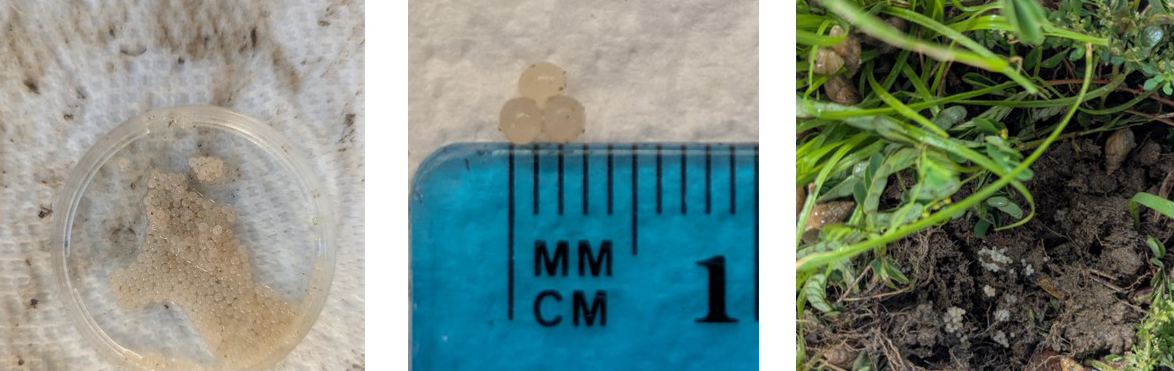
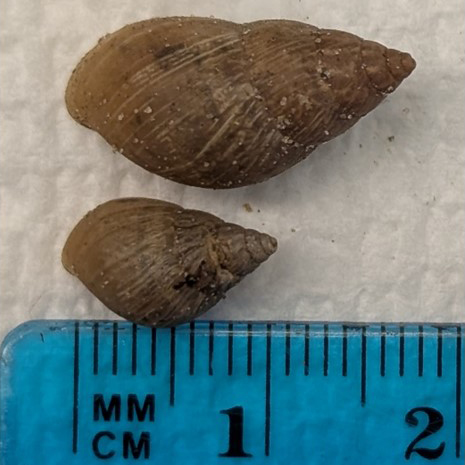
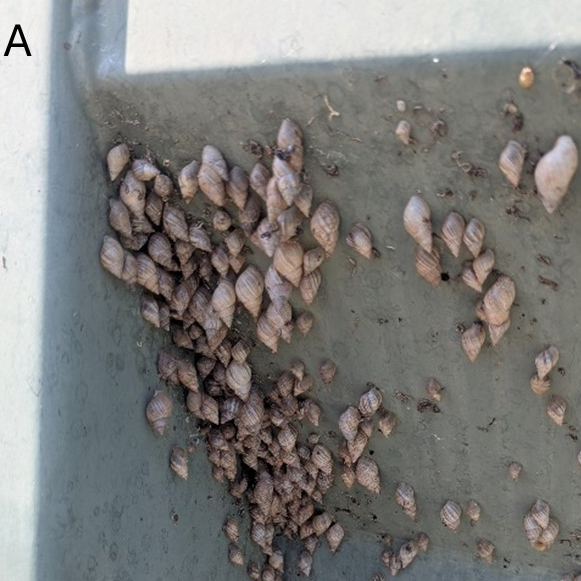 Figure 3. (A) Commonly observed climbing behavior.