Rosy Wolf Snail
Scientific name: Euglandina rosea
Common name: Rosy Wolf snail
Authors: Kathi Malfa
The predatory snails in the Euglandina genus are native to the southeastern region of the United States. These terrestrial snails are often found in hardwood forests, especially near leaf litter and moisture. Like other land snails, the Euglandina snails are hermaphrodites, meaning each individual contains both male and female reproductive organs. While often referred to as Euglandina rosea, the native genus of Euglandina may represent a variety of species. Because Euglandina snails exclusively prey on other species of snails and slugs, they have been introduced to non-native regions in attempts to control pest species of snails. This has led to the establishment of these predatory snails outside their native ranges, causing a detrimental impact to ecosystems such as California and Hawaii, in which the Euglandina snails threaten non-targeted native species.
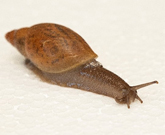
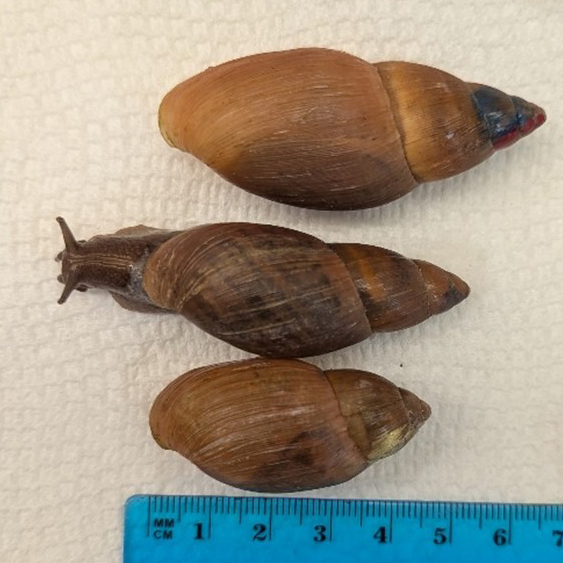
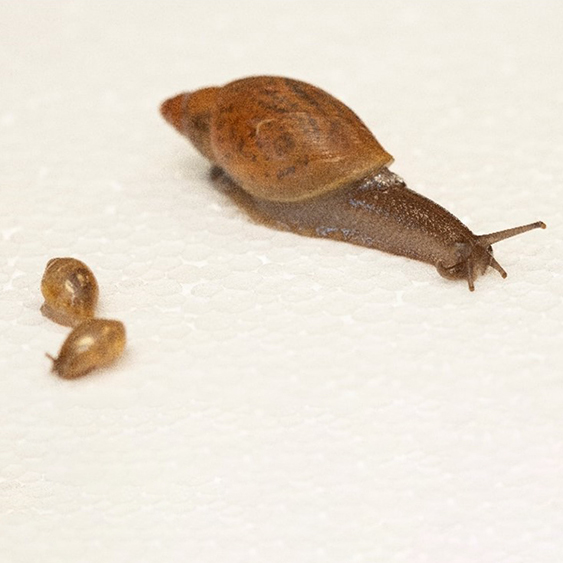
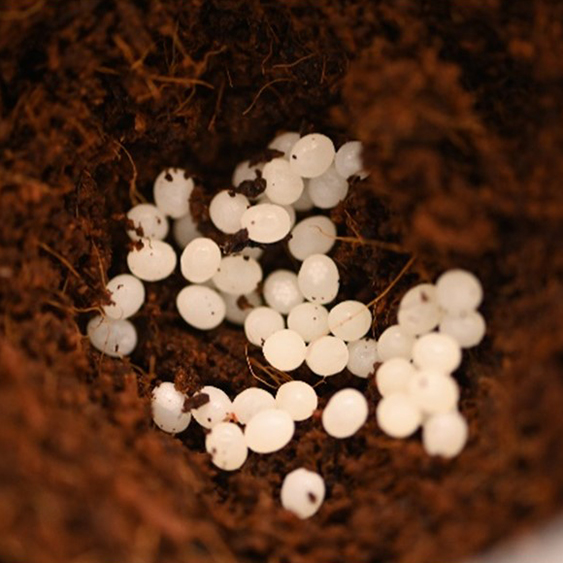
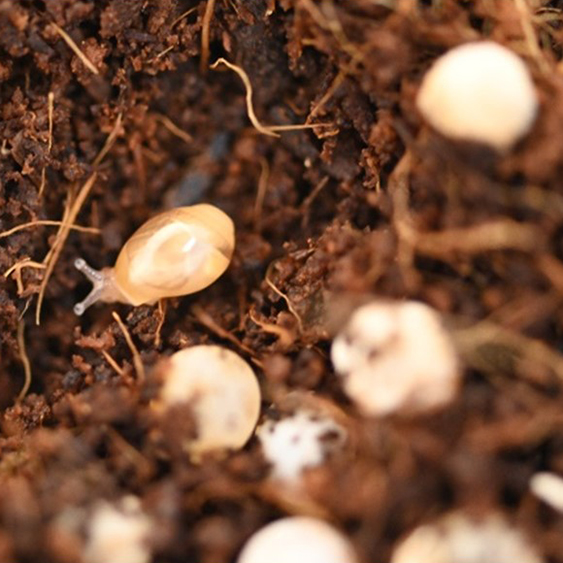
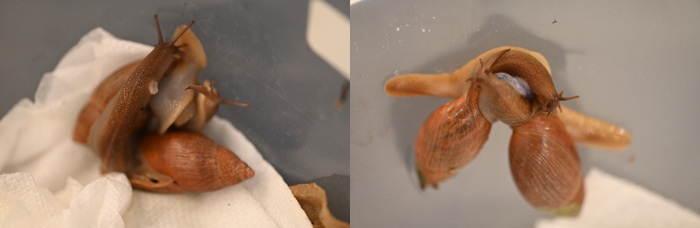
Euglandina snails can be identified by their conical, tan to amber colored shells, which measure up to 6 to 7 cm in length. The shell typically contains 3 to 4 whorls, tapering towards the posterior end, and some have dark striations throughout. The snail's body is usually darker than the shell, with a long neck and head that extends well beyond the shell. The head contains two pairs of tentacles, with the vertical pair containing the eyes (round black dots), and a lower pair pointed towards the ground. The head also has a distinctive set of curved lips that extend laterally from the head. Euglandina eggs are round and white, opaque in color, with a rough texture. The eggs are typically laid 1 to 2 cm below the soil surface with an average of 30 eggs per clutch. Euglandina hatchlings are 6 to 11 mm in size, with a smooth, shiny shell that is tan and translucent initially but darkens and hardens over time.