The NextGen AgTech Innovators initiative offers many programs and activities designed to interest and involve students aged 13-18. Explore the programs and activities on this page to find the best fit.
Florida 4-H University Workshop
2025
A two-day, immersive AgTech learning experience designed for youth ages 13–18. Led by UF/IFAS faculty and IoT4Ag professionals, the workshops introduce students to data science, AI, field diagnostics, robotics, and problem-solving in agriculture.
Day 1 – Plant Doctor GPT
Introduction to AI and plant disease detection
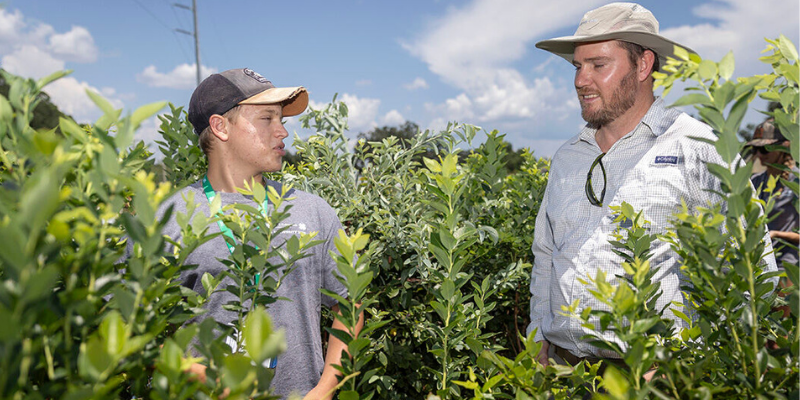
Field observations of healthy vs. diseased plants
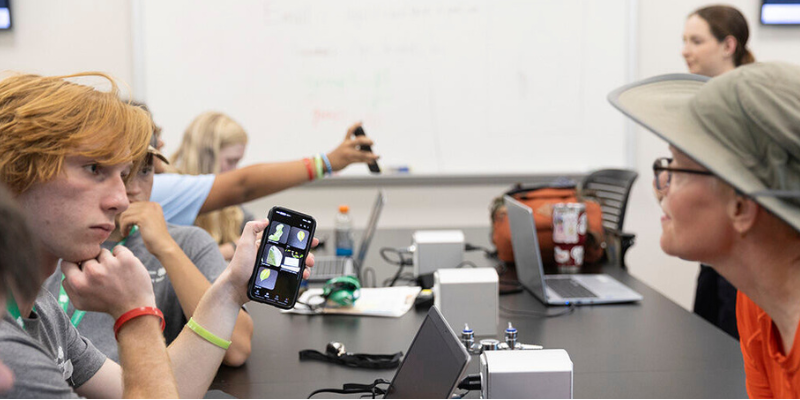
Collecting images for building datasets
Creating a simple machine learning model
Hosting and sharing their AI model using GitHub Pages
Day 2 – Tech Solutions for Agriculture
Identifying authentic agricultural challenges
Brainstorming IoT- and sensor-based solutions
Designing solutions
Presenting innovation concepts to UF faculty and peers
These workshops expose students to real research and build foundational STEM, problem-solving, and communication skills.
2024
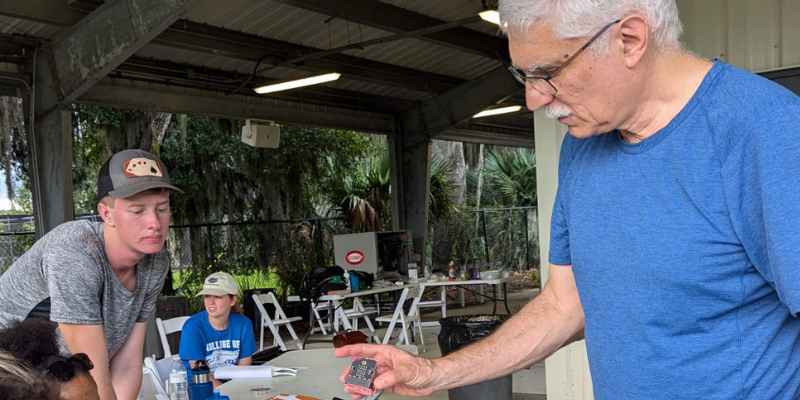
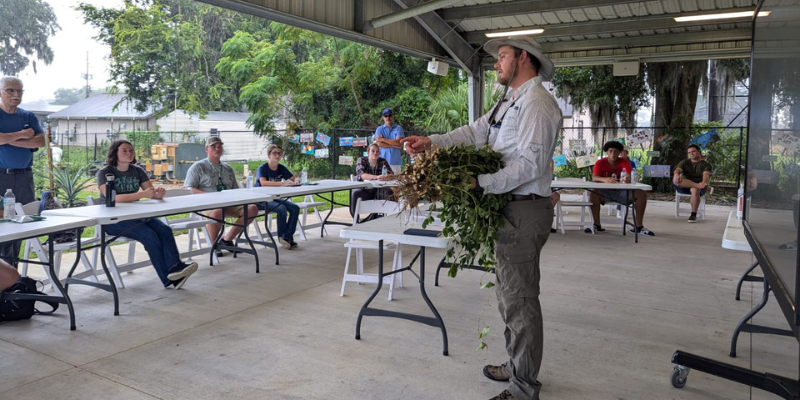
The NextGen AgTech Innovators projects provide immersive, hands-on learning experiences that introduce youth to real agricultural systems and the technologies used to support modern farming. Through guided field activities, students explore plant physiology, irrigation practices, soil moisture, and plant health while working directly in crop production settings. They observe healthy and stressed plants, learn how water moves through plants, and examine how environmental factors such as soil moisture, temperature, and humidity influence crop growth and disease development. These projects emphasize scientific observation, experimentation, and data collection as core components of agricultural decision-making.
A central focus of the projects is the use of IoT and sensor-based technologies to collect and analyze field data. Students build and install soil moisture and humidity sensors, compare different irrigation methods, and evaluate trade-offs between water conservation, crop health, and resource use. They also engage in basic plant disease diagnostics through sample collection and microscopy, applying the disease triangle to understand outbreak conditions. Each project concludes with reflection and discussion, encouraging students to interpret results, recognize limitations, and connect their learning to real-world agricultural challenges and STEM career pathways.
Fall 2025
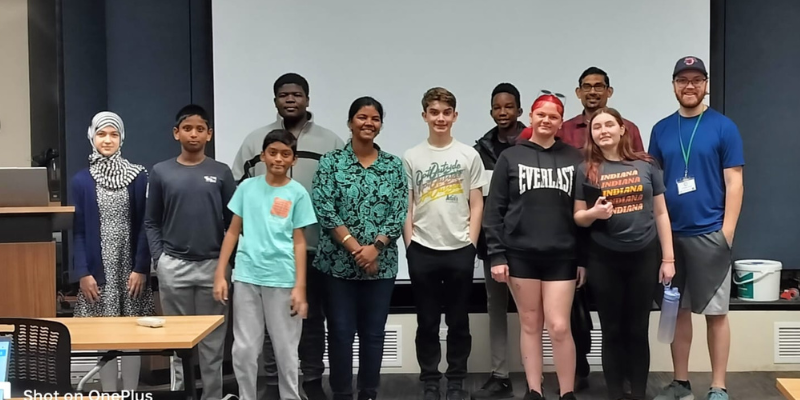
A more advanced club focusing on robotics, AI, and IoT systems.
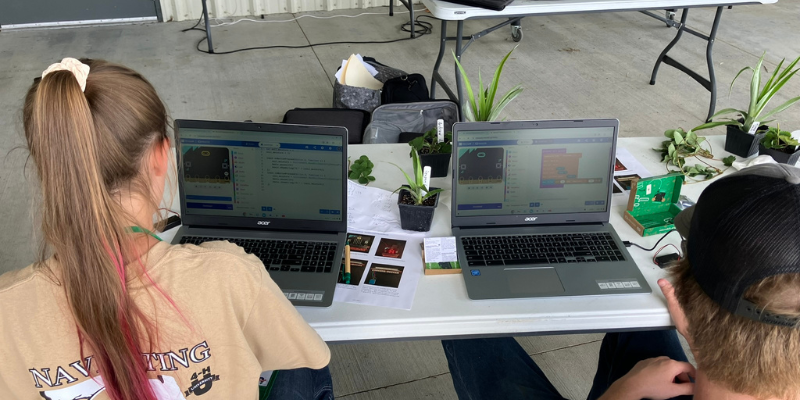
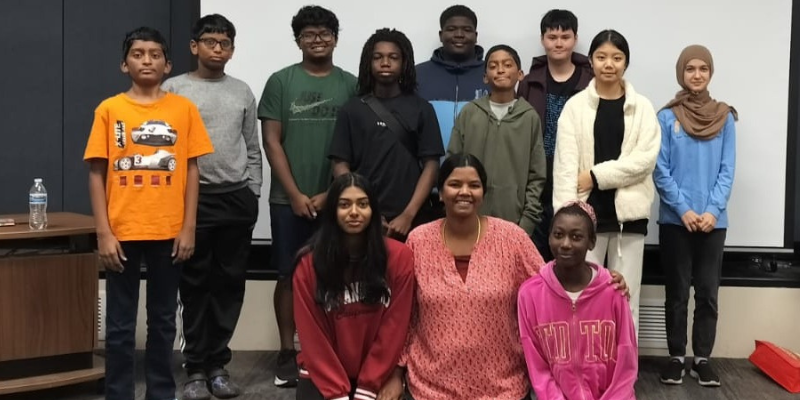
A hands-on, beginner-friendly STEM club introducing youth to IoT, coding, sensors, and agricultural problem-solving.
Club Highlights
Total Youth Members: 8
Total Volunteers: 3
Final Project: Soil moisture sensor–based water pump control
Learning Components
Tinkercad circuit building
Sensor calibration
Microcontroller basics
Automation logic
A structured collection of hands-on modules introducing youth to smart agriculture concepts. Each module includes student handouts, educator guides, worksheets, coding examples, and activity instructions.
Module Name
Description
Faculty Spotlight
Smart Strawberry: The Digital Irrigation Lab
Students design automated irrigation systems using Tinkercad Circuits to understand precision water management.
Covers livestock technologies, wearables, sensors, and automated feeders to improve animal health and farm management.
Plant Doctor AI – Disease Detection
Students collect plant images, annotate datasets, and build basic AI models for classifying healthy vs. diseased leaves.
Aquasense 360 – Algal Bloom Exploration
Students learn how to detect, map, and analyze algal blooms in Lake Okeechobee using satellite data and Google Earth Engine. They explore chlorophyll levels, water indices, and environmental patterns through hands-on coding and real-world remote sensing.
Smart Farming Rule-Based AI Module
Students build rule-based AI decision systems to manage crop conditions using reasoning.
Smart Peanut Sensor Module
Youth explore soil moisture & temperature using Micro:bit sensors and learn how smart sensors support peanut farming.
Additionalmodules will be added as they are developed.
The NextGen AgTech Innovators program helps students participate in hands-on projects that integrate sensors, coding, robotics, and AI to solve authentic agricultural problems. These projects help youth build creativity, confidence, and real-world STEM skills.
Featured Student Projects
Soil Moisture–Activated Smart Irrigation System: Youth designed a water pump system using soil moisture sensors and Arduino Uno. This project teaches automation, sensor calibration, and water conservation in agriculture.
Line-Following Robot for Field Navigation: Students built and programmed a robot using mBlock IDE to follow crop-row paths. The project introduces robotics logic and agricultural automation.
Pick-and-Place Robotic Arm for Horticulture: Using mBlock and servo systems, youth learned how industrial robots perform repetitive tasks. It demonstrates how tomato grafting, packaging, and sorting are automated.
AI-Based Leaf Disease Classifier: Students collected leaf images and trained a Teachable Machine model. The project helps youth understand plant diagnostics, dataset creation, and AI prediction.
Image created using an AI-based design tool. No copyrighted source material was intentionally reproduced.
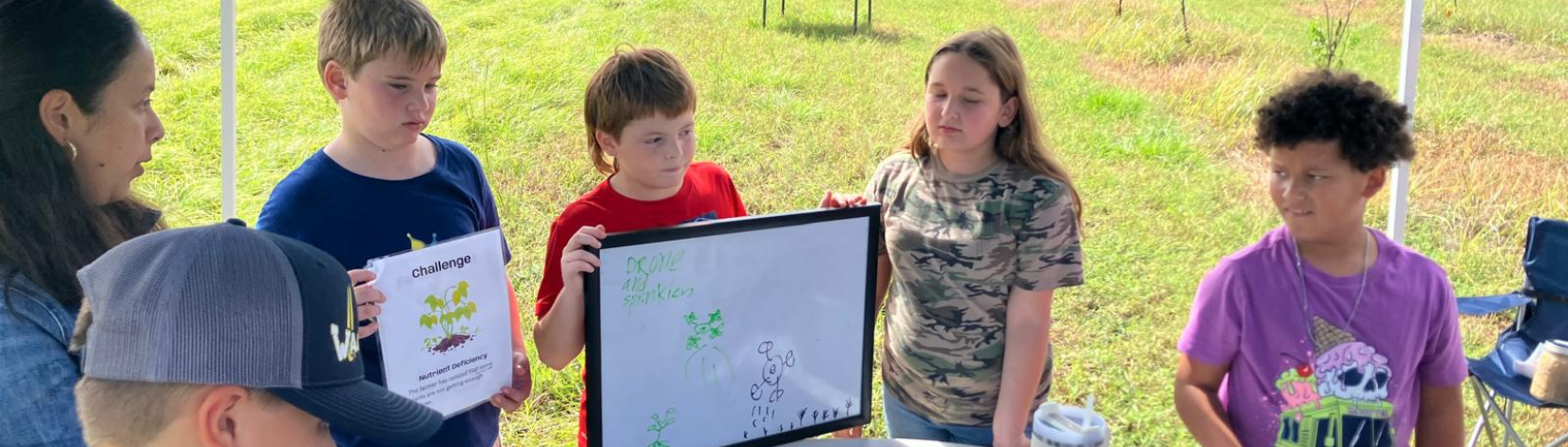
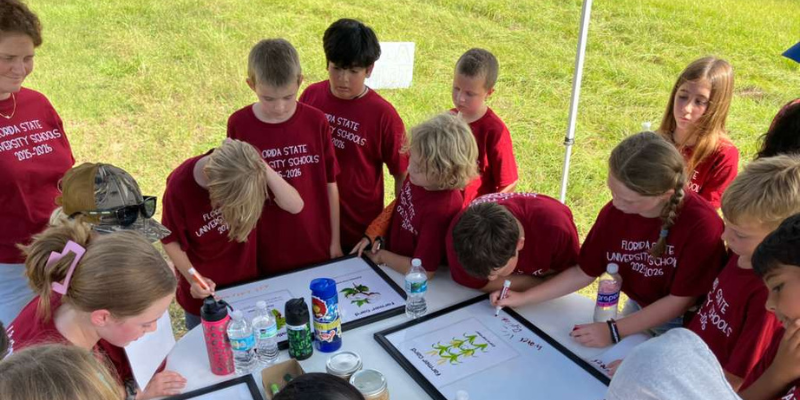
Also known as Ag Tech Station, Ag Adventures is a large UF/IFAS-led agricultural education event where students rotate through hands-on learning stations across the NFREC campus. As part of this event, Ag Tech Station engages youth in solving real Florida farm problems using creativity, teamwork, and STEM concepts.
At this station, students role-play as Florida farmers, complete short relay challenges, and design simple prototypes to address issues like pests, water management, or crop stress. The activity is built on the 4-H experiential learning model (Do–Reflect–Apply), helping youth learn through doing, sharing, and applying their ideas.
The Ag Tech Station introduces students to how technology—such as sensors, automation, drones, and problem-solving frameworks—helps modern agriculture address workforce shortages, pests, and environmental challenges. The experience builds critical thinking, communication, and teamwork skills while helping youth understand the role of AgTech in Florida’s farming systems.